
Standard broom finish
keeps things non-slip and practical.
Est. Shortland NSW · Concrete Specialists
We’ve been laying concrete footpaths across Newcastle, Lake Macquarie, and Maitland for years, and we know this region inside out. The sloping blocks in Merewether, the coastal salt air in Swansea, the clay movement in New Lambton — it all plays a role in how a path needs to be designed, graded, and finished to actually last.
Whether you need a front entry path that makes a strong first impression, a side access walkway that’s wide enough for the bins and the bloke carrying them, or a council-compliant street frontage footpath that ticks every box — our team handles it all. We work with homeowners, body corporates, and strata managers across the Newcastle region, delivering concrete pathways that are safe, durable, and built to handle whatever the Hunter Valley weather throws at them.
Newcastle’s coastal conditions are tough on outdoor surfaces. Salt air, heavy summer downpours, and soil movement from clay-heavy ground put pressure on anything that isn’t built with durability in mind. Concrete handles all of that without flinching, which is why it remains the go-to pathway material for properties across the region.
Here’s why concrete footpaths make sense for Newcastle homes and commercial properties:
For body corporates and strata properties, that low maintenance factor carries real weight. Less ongoing cost, fewer liability concerns from uneven surfaces, and a clean, professional appearance that holds up year after year.
CALL (02) 4072 2367 NOW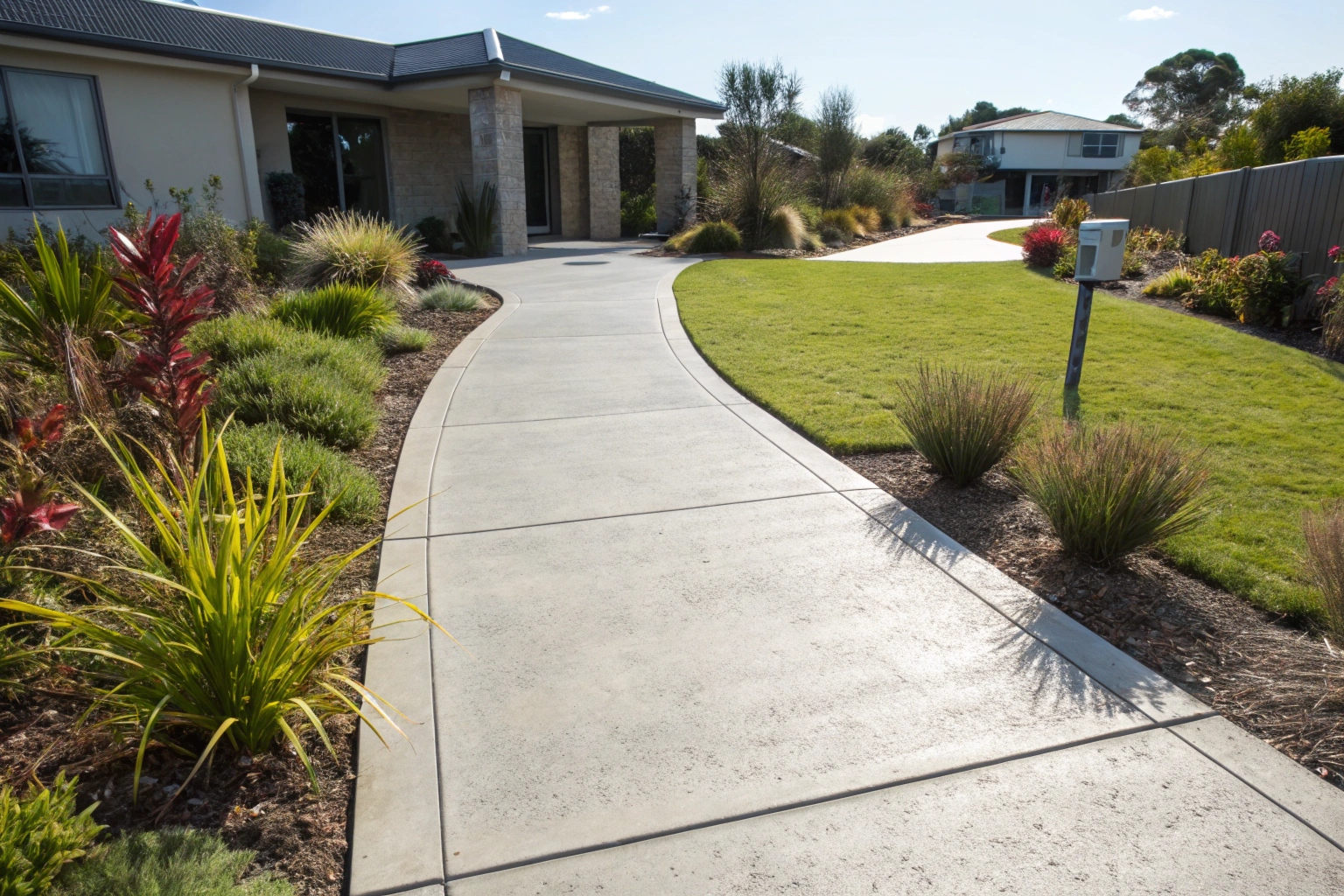
No two properties are the same, and the footpath work we do across Newcastle reflects that. From tight side access paths on older inner-city blocks to wide, council-spec street frontage installs for unit complexes — the applications vary, but the standard of work doesn’t.
For homeowners, concrete pathways solve a range of practical problems while adding genuine value to the property:
For body corporates, strata managers, and commercial property owners, we handle:
keeps things non-slip and practical.
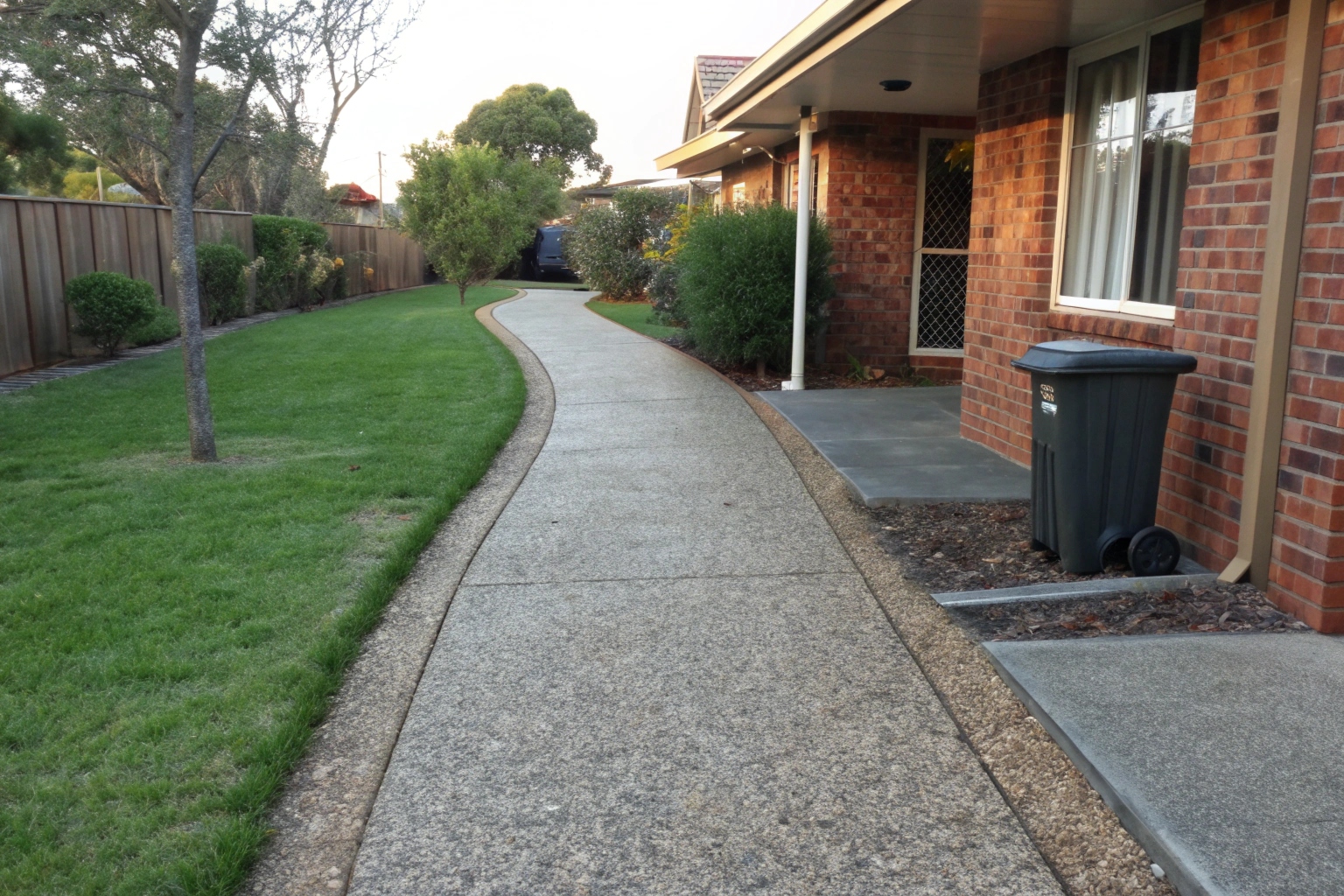
adds texture and visual appeal.
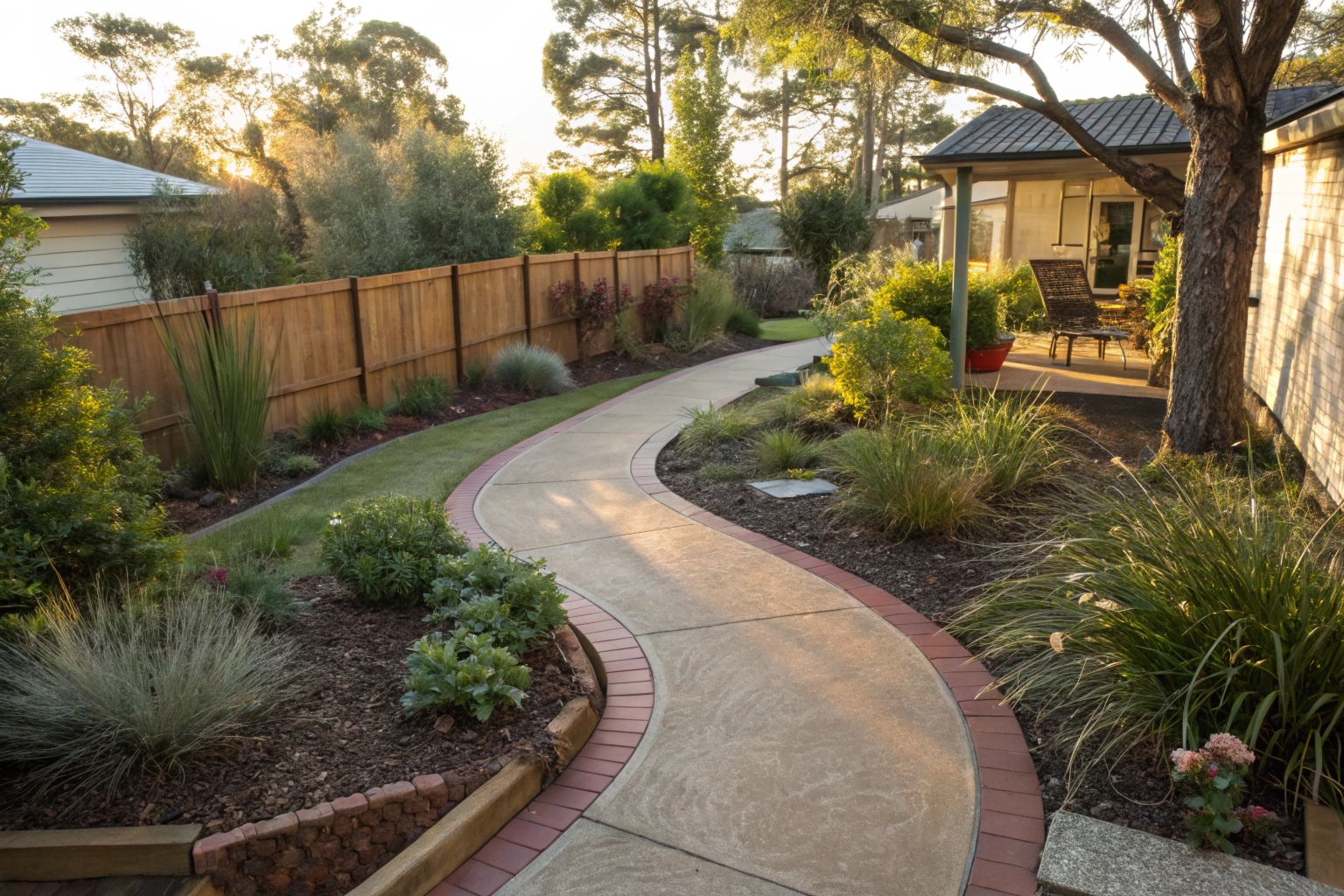
lifts the aesthetics to match existing landscaping.
deliver a paver look with concrete durability underneath.
One area where a lot of homeowners and strata managers get caught out is council compliance. Footpath work — particularly anything that connects to or runs along a public street — comes with specific requirements that vary between Newcastle City Council and Lake Macquarie Council, and getting it wrong can mean costly rectification work down the track.
We’ve worked alongside both councils long enough to know exactly what’s required, and we build that knowledge into every job from the quote stage onwards.
Street frontage paths, kerb crossover aprons, and any shared pedestrian infrastructure on strata or community title land all fall under council oversight. Getting the gradient right isn’t just about compliance — on Newcastle’s notoriously hilly terrain, a poorly graded path can funnel water directly toward a building or neighbouring property.
We handle the technical side so you’re not left guessing. Every footpath we install that touches council land is built to specification, documented properly, and finished to a standard that won’t attract a rectification notice.
A well-built concrete footpath doesn’t happen by accident. Every job we do follows a structured process that accounts for site conditions, drainage requirements, and the specific finish the client is after — because cutting corners at any stage shows up in the finished product, usually sooner than anyone would like.
We come out, walk the site, take measurements, and assess the ground conditions. Sloping blocks, existing drainage, tree roots, and access constraints all factor into how we approach the job. You get a written quote with clear specifications — no vague estimates that blow out once work starts.
The existing surface is excavated to the correct depth, and the sub-base is compacted and graded to achieve the right fall for drainage. This stage is where long-term performance is won or lost — a poorly prepared base leads to cracking and movement down the track, regardless of what goes on top.
Timber formwork is set to define the path edges and hold the correct grade. Steel reinforcement — typically SL72 or SL82 mesh depending on the application — is laid to give the slab the tensile strength it needs to handle load and resist cracking as the ground moves beneath it.
Concrete is poured, screeded, and finished to the specified surface — broom, exposed aggregate, coloured, or stamped. Expansion joints are cut or placed at appropriate intervals to control where movement occurs.
Proper curing is applied to protect the surface during the critical early hardening period. The site is cleaned up, edges are finished neatly, and the path is ready for use within the appropriate timeframe.
We install concrete footpaths throughout the Newcastle region, covering a wide service area that includes residential suburbs, coastal communities, and inland growth corridors across the Hunter.
Whether you’re a homeowner in Merewether wanting a clean front entry path, a strata manager in Charlestown dealing with deteriorating common area walkways, or a developer in Thornton needing footpath infrastructure across a new residential stage — we’ve got the crew and equipment to handle it.
We’re a local business, and that matters when it comes to concrete footpath work in Newcastle. We understand the soil conditions, the slopes, the council requirements, and the coastal exposure that shapes every project across different suburbs. That local knowledge shapes every quote we put together and every path we pour.
For standard residential footpaths, 100mm is the typical thickness — enough to handle foot traffic, prams, and mobility aids without issue. Where the path needs to carry vehicle crossover loads, such as a driveway apron or shared access point, we increase that to 125mm or more and adjust the reinforcement accordingly. The right thickness depends on the application, and we specify this clearly in every quote.
Generally 24 to 48 hours for light foot traffic, though we recommend giving it the full seven days before any heavier use. Concrete reaches the bulk of its structural strength over the first month of curing, so the longer you can leave it undisturbed early on, the better the long-term result.
All concrete moves to some degree as the ground beneath it shifts and temperatures change. That’s normal and expected. What separates a well-built path from a poorly built one is how that movement is managed — through proper sub-base preparation, correct reinforcement, and strategically placed control joints that direct any cracking to predetermined locations rather than letting it run randomly across the surface.
For purely private paths within your property boundary, generally no. For anything that touches the road reserve, connects to an existing council footpath, or involves a kerb crossover, you’ll likely need approval. We sort this out at the quote stage so there are no surprises.
Broom finish remains the most practical non-slip option for sloping surfaces. Exposed aggregate is also a strong choice — the textured surface provides good grip in wet conditions, which matters a lot in Newcastle’s wet season.
If you’ve got a pathway project in mind — whether it’s a simple garden path or a full council-compliant street frontage install — the best next step is a free on-site quote. We come to you, assess the site properly, and give you a written quote with clear specifications and no vague estimates.
There’s no pressure and no obligation. Just straightforward advice from a local team that knows Newcastle’s soil, slopes, council requirements, and coastal conditions better than most.